


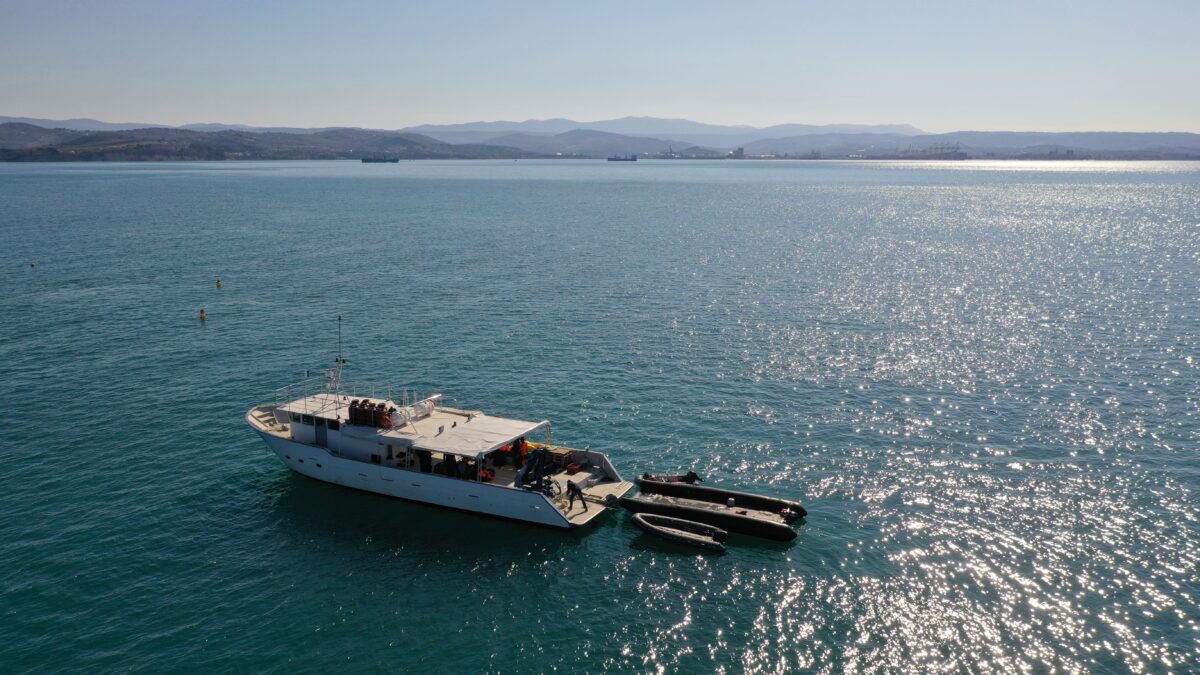
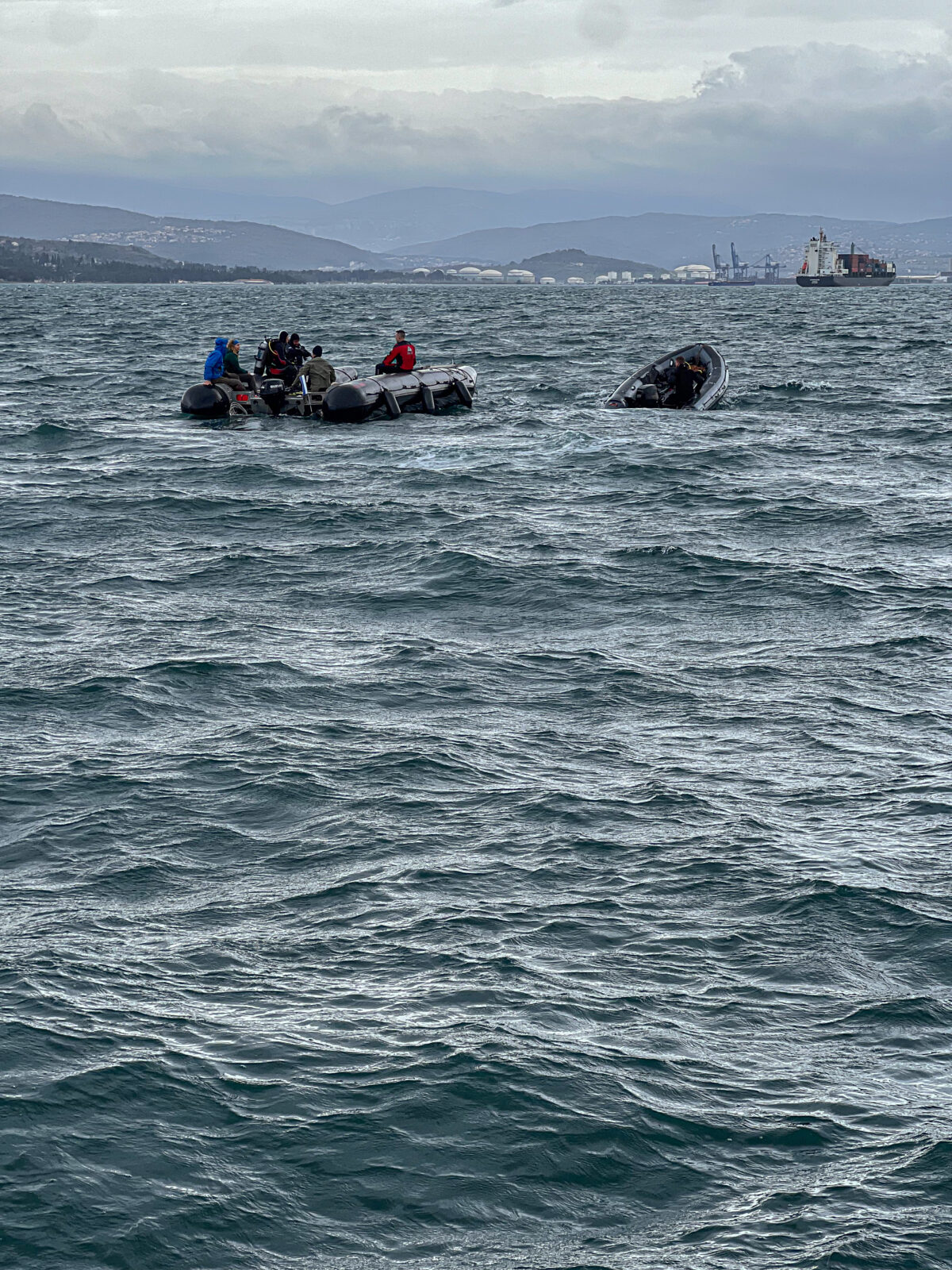
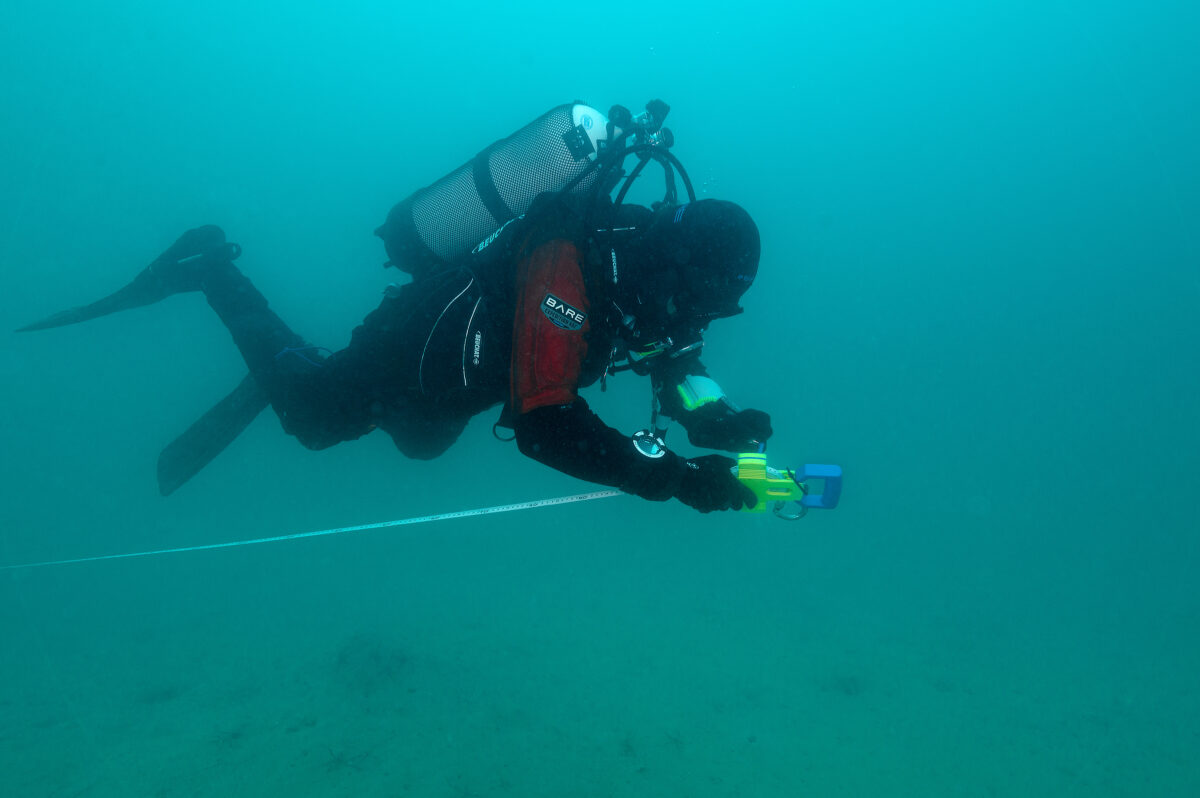
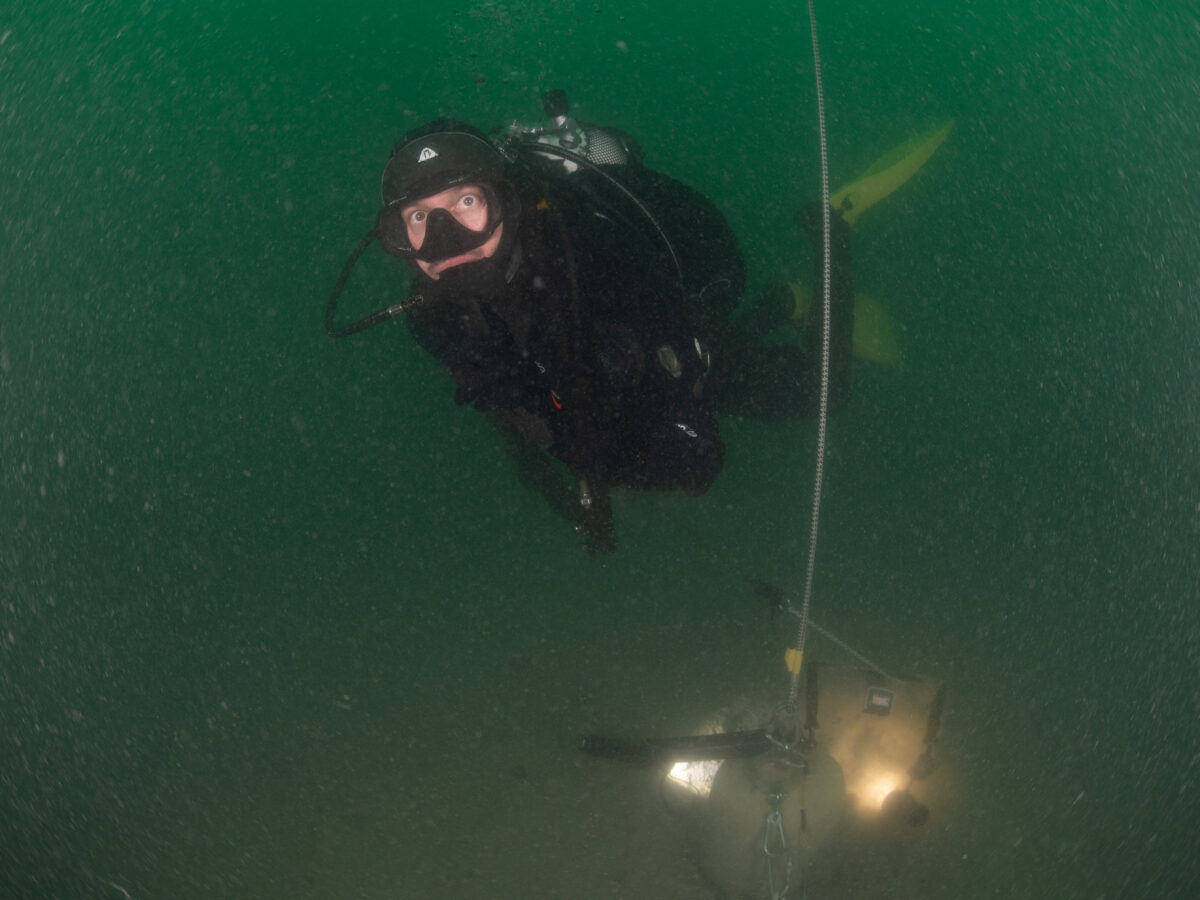
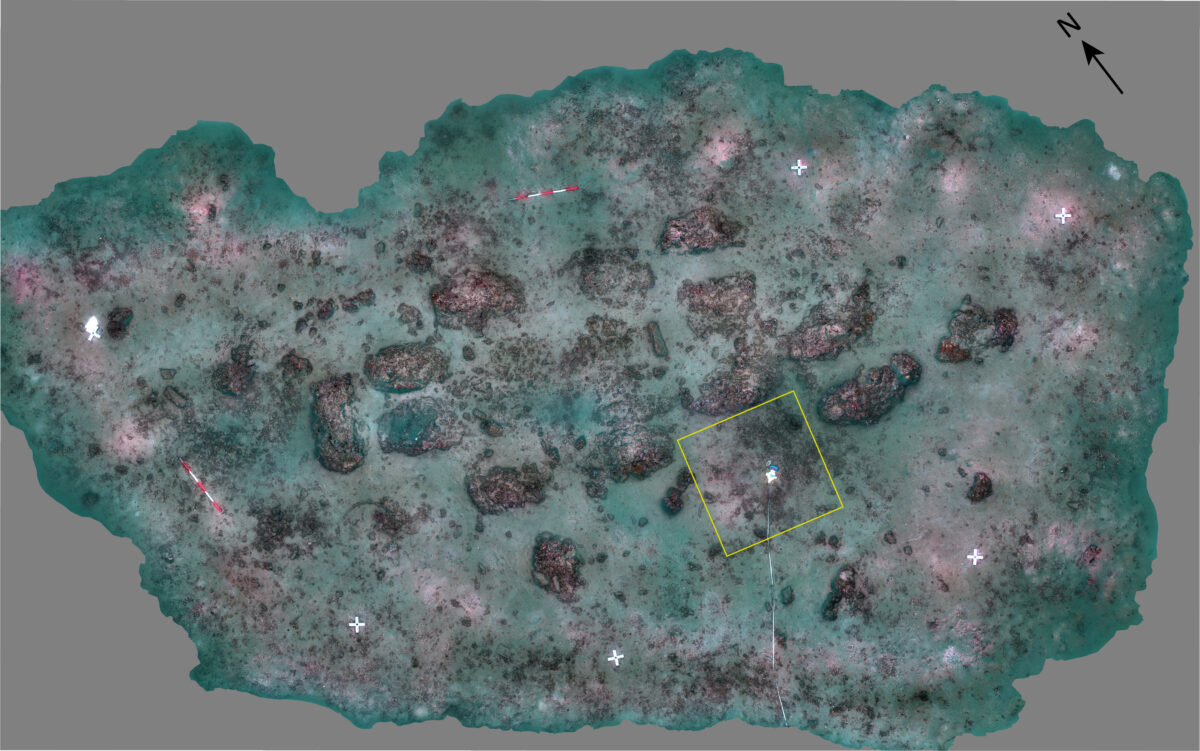
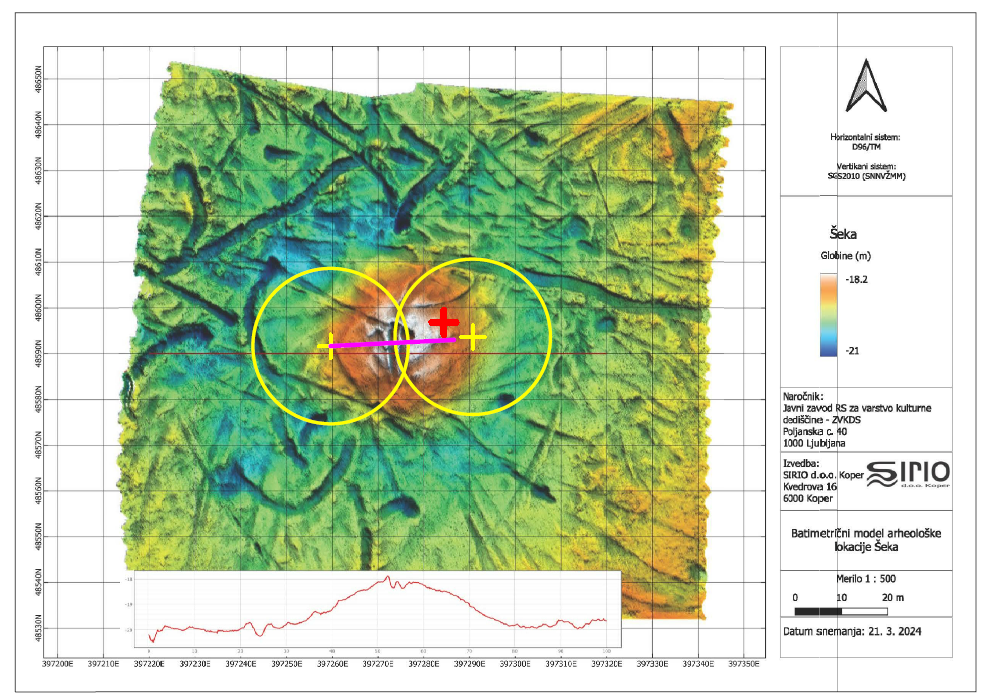
The continuation of the project related to the relocation of sediment from the area in front of the Port of Koper included documenting the current condition of the cultural heritage sites, including the creation of 3D models, and establishing a baseline for monitoring the effects of sediment relocation on underwater cultural heritage. We examined the following locations: 1 – the Aura barge (EID: 1-27900), 2 – the Kope Izola barge (EID: 1-29408), 3 – Ofsajd – a potential site identified on the basis of bathymetric survey data, 4 – the Belador vessel (EID: 1-29420), and 5 – Koprske šeke (EID: 1-29422).
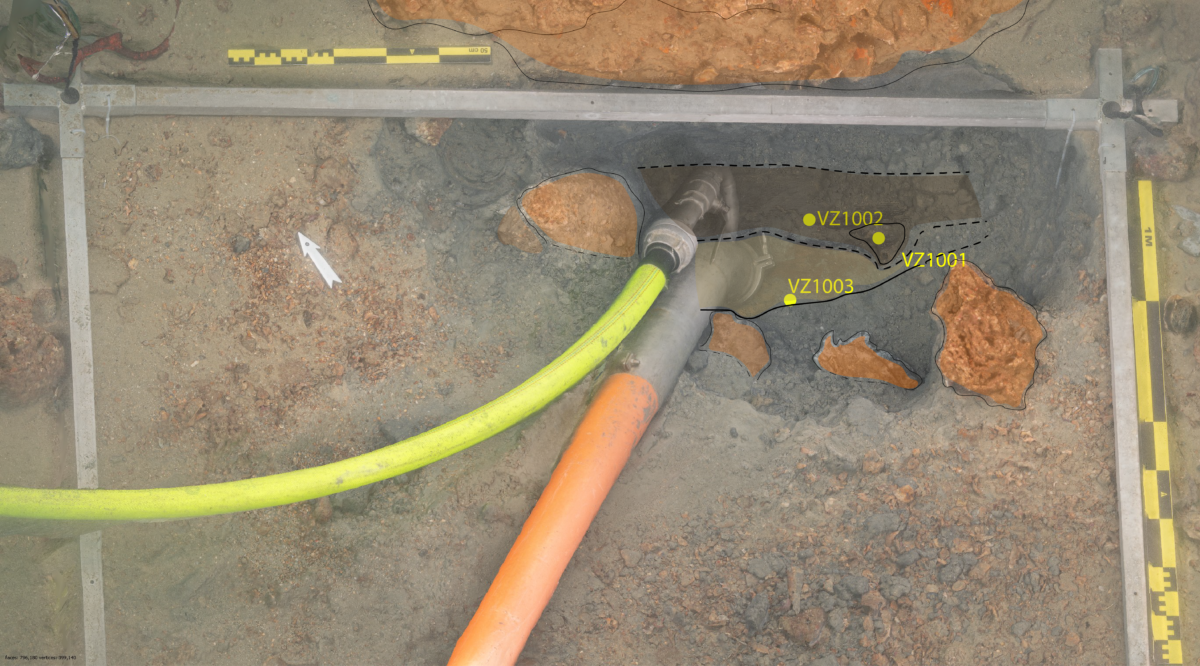
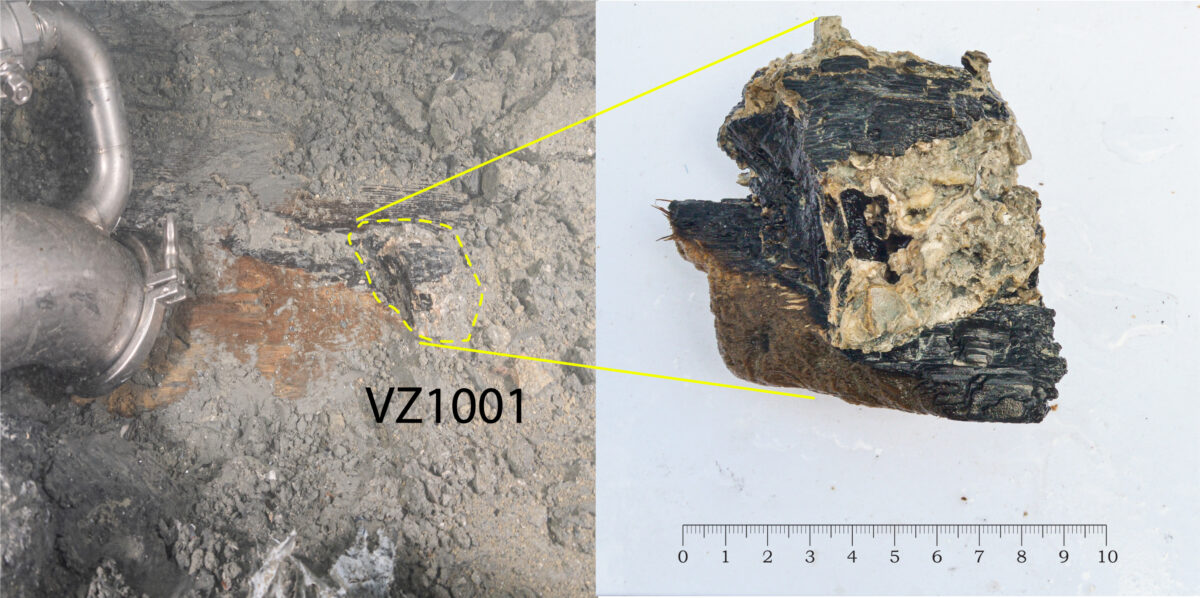
Of particular significance is the approximately 15-metre-long vessel at the Aura site, dated to the 1st century AD, or the Early Roman Imperial period. Elements of the vessel’s structure are certainly preserved at the site, and over the following centuries a reef of coralligenous formations developed on top of them, which are now visible on the seabed. The vessel’s structure is currently completely buried in sediment, making it difficult to determine its nature and extent without further investigation. Samples taken for dating indicate that the preserved wood is spruce. Coniferous wood was used in ancient shipbuilding for hull planking. More detailed investigation of the site would therefore be valuable, particularly given the risk of damage or even destruction caused by the anchoring of large vessels in front of the Port of Koper. Such research could reveal what is actually preserved beneath the coralligenous formations.
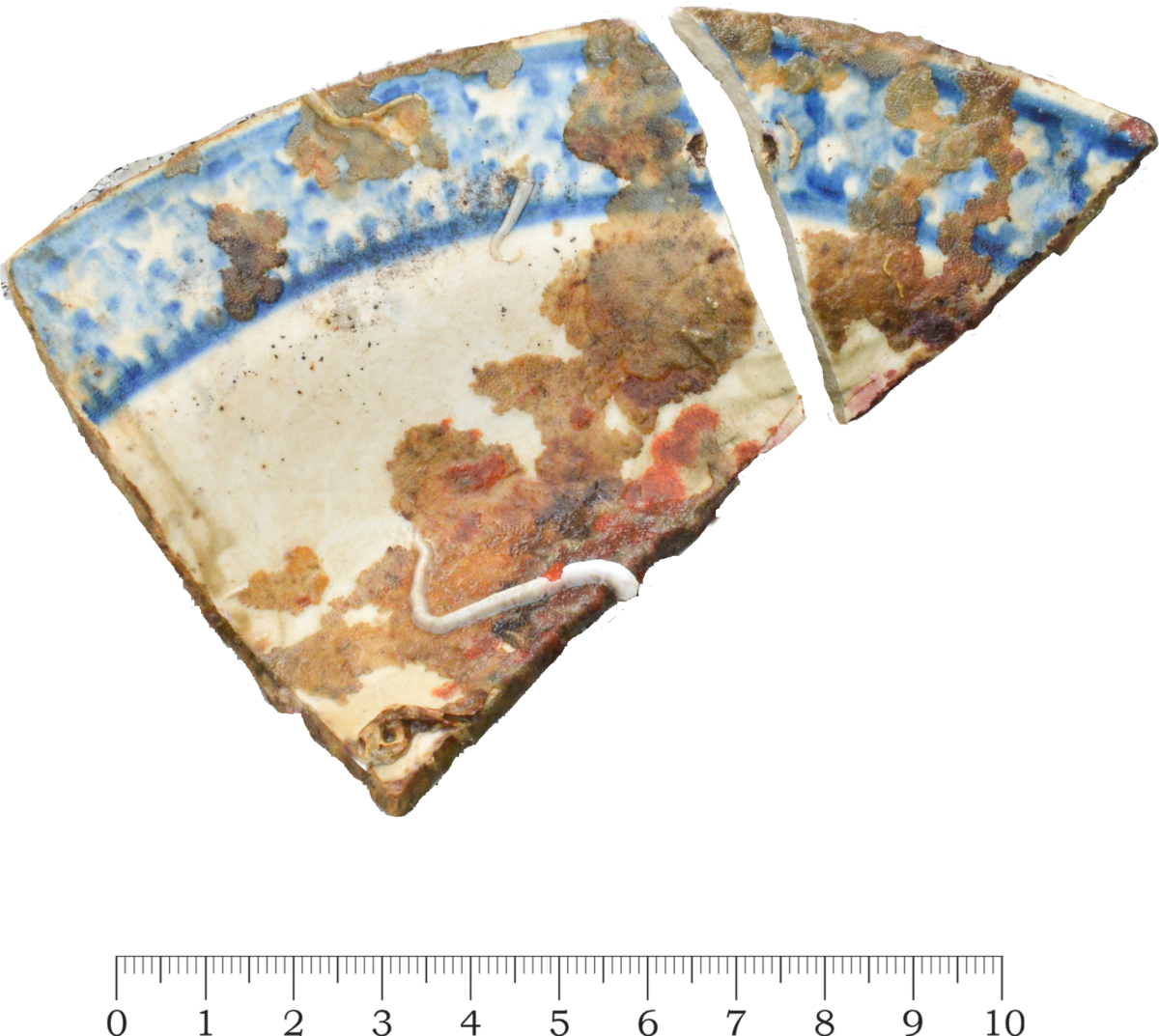
The other locations include known sunken cargoes and vessels dating to later periods, mainly from the 17th to the early 20th century.
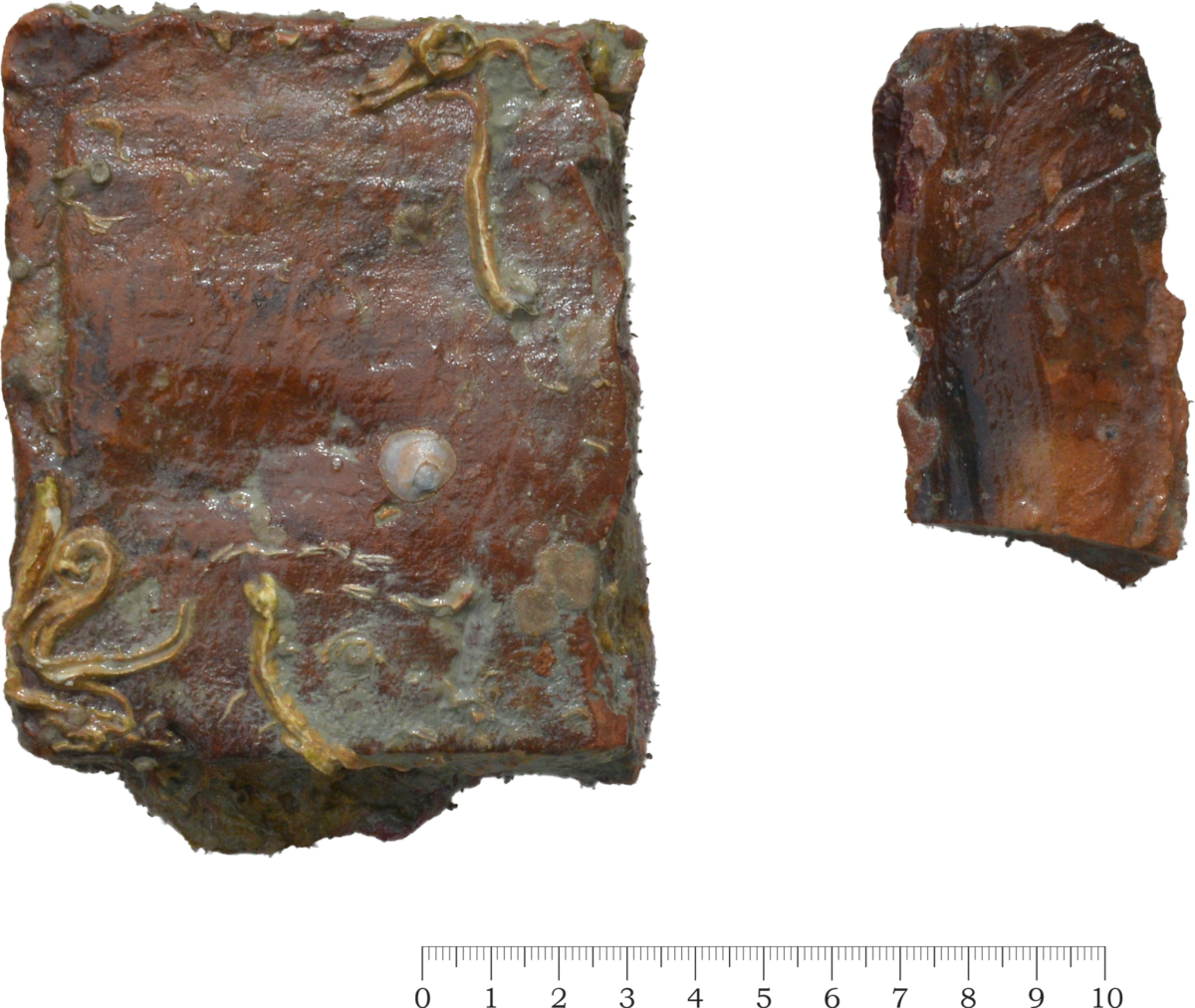
At the Kope site, we documented several groups of stacked roof tiles and individual pieces of building material, including both roof tiles and bricks. One of the better-preserved structures is rectangular in shape, while a smaller oval structure lies nearby. Its origin, whether natural or anthropogenic, cannot currently be determined with certainty. No remains of a vessel’s structure were identified during the survey.
In the area of the Belador site, we documented an extensive, relatively level deposit of small limestone rocks, heavily covered with algae and shells. Larger stone blocks were also observed among them, although it cannot currently be determined with certainty whether they were worked. Although there is not enough evidence to support a firm interpretation, the deposit may possibly represent remnants of the vessel’s ballast, which sank together with the vessel. No remains of a wooden structure were identified in this case either.
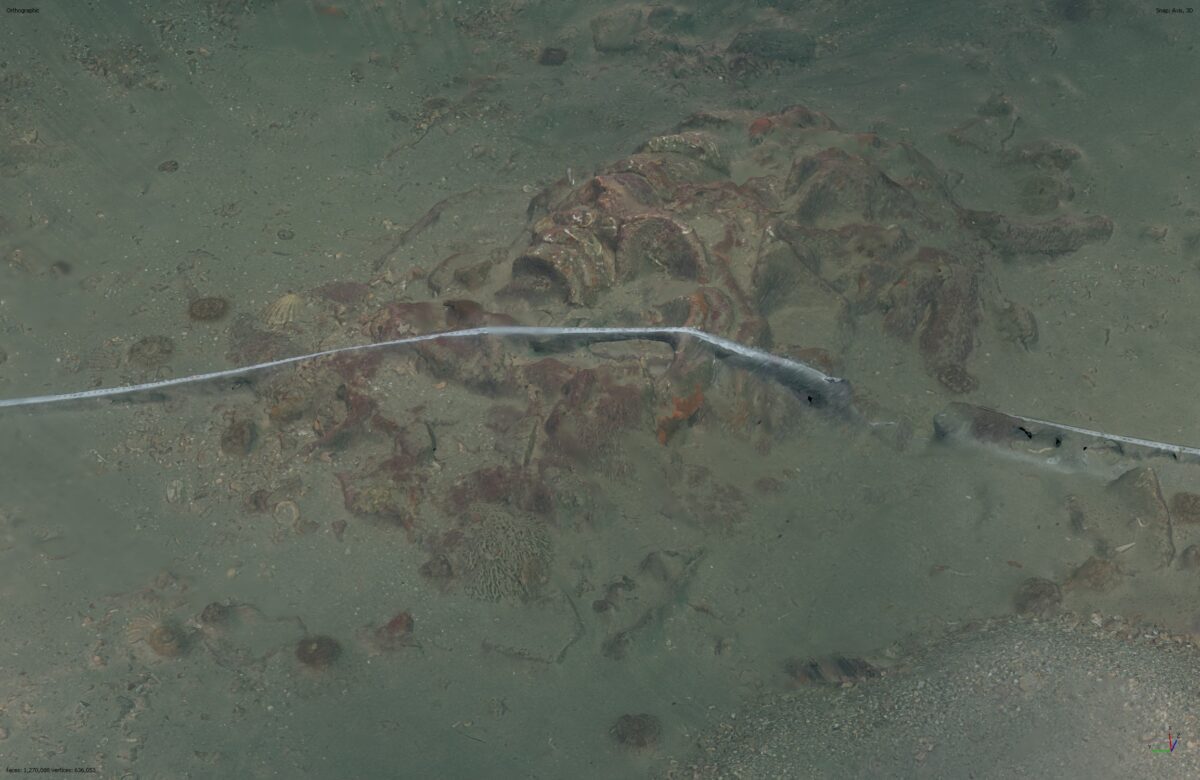
At the Koprske šeke site, the investigation was hampered by very poor visibility. Nevertheless, we documented several worked blocks of flysch stone and a large number of smaller worked stones on the seabed. The site is located in a highly exposed area, as evidenced by numerous anchor scars running directly across the site.
The condition of the sites will be monitored periodically in order to assess and track the impact of the intervention on the underwater cultural heritage in the area and to identify any potential threats to its preservation.